For years we have enjoyed Caladium candidum for its beautiful white leaves with greenish white veins. Tropical beauty brings refinement to shady gardens but does not like being ignored. Many gardeners find it difficult to care for this plant because of its precise needs. However, once gardeners understand the plant’s need for rest periods and adequate humidity, caring for Caladium becomes much easier. Here is how you can enhance your caladiums from merely surviving to thriving by paying attention to light exposure, water levels, and seasonal adjustments.
Key Points
- Keep the temperature range between 65-85°F with humidity and the soil pH between 5.5 and 6.5, and the soil should be well-draining.
- Place in filtered light or partial shade with only 2-4 hours of gentle morning sun to prevent leaf scorching.
- Water when the top inch of soil feels dry, directing water at soil level rather than on foliage.
- Before planting apply slow-release 10-10-10 fertilizer, then use liquid fertilizer with higher phosphorus every three weeks.
- Store tubers during winter dormancy in dry, ventilated containers with peat moss at 60-65°F.
The Distinctive Appeal of Caladium Candidum
Elegance personified, Caladium Candidum stands out in the Araceae family with its striking appearance and visual drama.
A botanical masterpiece that captivates with pristine white elegance and commands attention in any shaded sanctuary
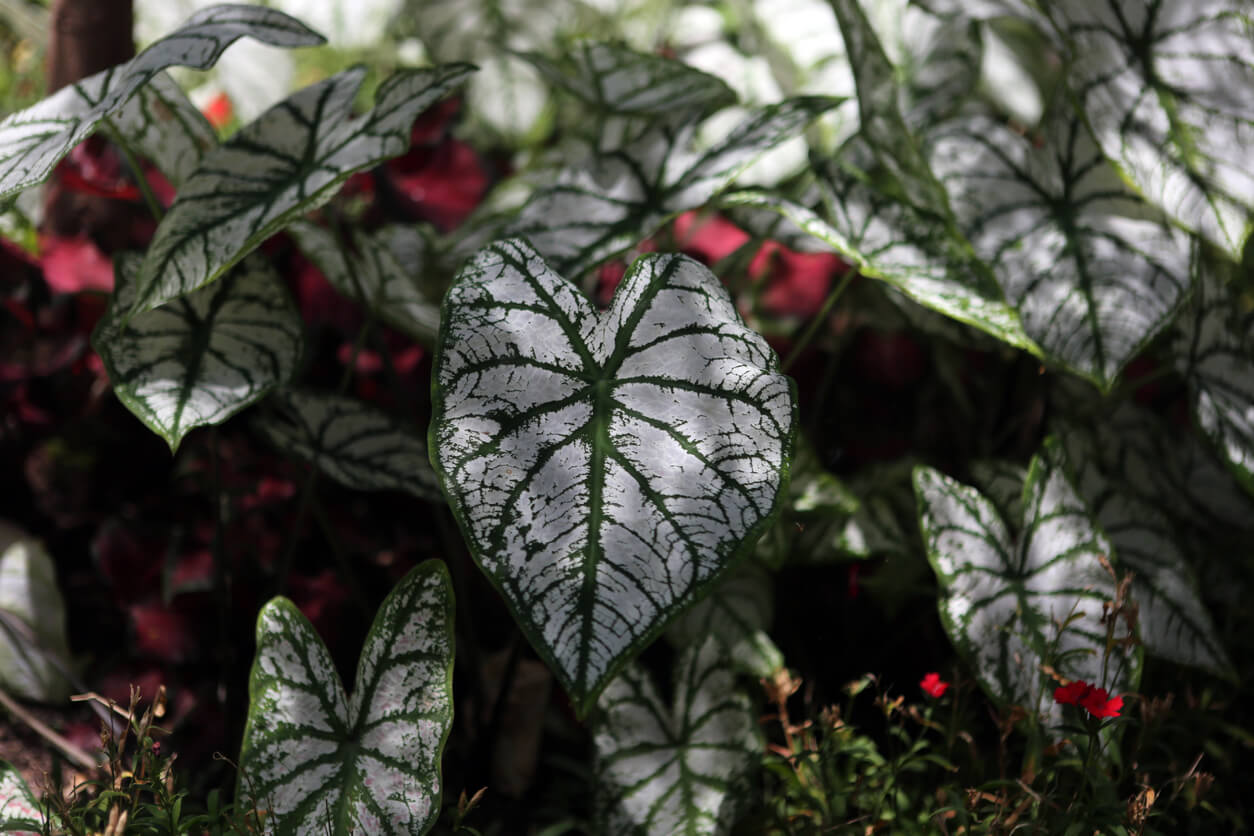
We love its heart-shaped leaves with white centers that have green veins and edges, which glow in shaded gardens.
The white leaves of this particular cultivar do not change with seasons, unlike other Caladium cultivars.
From corms, it produces leaves that are 8-12 inches in length which multiply annually to form big clumps when planted in suitable positions.
We have noticed that Candidum stands out very well when paired with dark foliage plants like Colocasia or Begonias.
In our gardening community, this tropical perennial serves as both specimen plant and understory accent, thriving in USDA zones 9-11.
This cultivar reflects the filtered light in ways that remind us of the refined beauty of shade gardening.
In the hot and humid climate of Louisiana, Caladium Candidum combines nicely with Louisiana iris for a beautiful seasonal contrast if properly cared for in partial shade.
Optimal Growing Conditions and Light Requirements
While many tropical plants demand exacting conditions, Caladium Candidum thrives within specific parameters that mimic its native understory habitat.
We’ve found these beauties prefer temperatures between 65-85°F with high humidity levels of 50-60%.
For ideal growth, we’ll want to plant our Candidums in rich, well-draining soil with a pH between 5.5 and 6.5.
They are best suited to filtered light or partial shade that allows them to get 2-4 hours of morning sun. Afternoon direct sun exposure can damage the white leaves we love.
In our gardening community, we have learned that it is important to keep the soil consistently moist but not waterlogged.
During winter months, we will reduce watering to the minimum because the plant will naturally withdraw into its tuber for rest.
Similar to many acid-loving plants in Louisiana, Caladium Candidum prefers acidic soil.
Soil Preparation and Fertilization Needs
Getting the right soil for Caladium Candidum starts with mixing nutrient-rich, organic matter that allows the soil to retain moisture and drain well.
We suggest mixing two parts peat moss with one part perlite and one part quality garden soil to achieve an acidic environment with pH 5.5-6.5.
Before planting, we will add a slow-release 10-10-10 fertilizer into the soil we have prepared.
Our Candidums need liquid fertilizer with higher phosphorus content (such as 10-20-10) applied every three weeks throughout the growing season.
This promotes those stunning white leaves we’re all after.
A layer of crushed pine needles around Caladium Candidum plants helps keep the soil moist and protects them from pests like slugs and snails.
Watering Techniques for Healthy White Foliage
The way we water Caladium Candidum directly shapes the formation of its perfect white leaves which everyone wants to see.
We discovered that these tropical plants thrive in moist soil environments but never accept waterlogging conditions.
We water our Caladium Candidum when the soil’s top inch shows dryness and perform this task twice per week during summer months.
Watering in the morning helps prevent fungal diseases that damage those beautiful white leaves.
We should direct the water stream towards the soil base instead of touching the foliage while using room-temperature water to prevent damage.
The plant requires minimal watering during dormancy period that includes fall and winter seasons because it needs rest.
In containers ensure drainage by checking moisture levels once per week.
The most productive Caladium Candidum growers achieve humidity between 60-70% through misting or using humidity trays.
The soil moisture meter provides an accurate way to check when your Caladium needs water while preventing damage from excessive or insufficient watering of these sensitive plants.
Seasonal Care: Dormancy and Rebirth Cycles
The proper winter rest period of Caladium candidum leads to robust spring development of new growth.
The storage process for tubers consists of placing them in dry ventilated containers filled with peat moss at 60-65°F while the foliage dries for several days after digging.
We will start the rebirth process by planting tubers 1-2 inches deep in enriched soil when spring temperatures reach 65°F while providing only minimal watering until sprouts appear.
Your planting mixture will become more nutritious when you add organic matter such as quality compost because it enhances soil structure while providing essential nutrients for strong caladium development.
Winter Storage Essentials
Caladium candidum plants indicate their transition to dormancy by showing yellowing foliage and decreased growth activity as autumn leaves start their descent.
The plant needs this rest period which appears as dormancy because it helps these tropical species restore their health.
The successful regrowth of tubers in the upcoming season depends on proper storage methods.
The winter season begins when temperatures stay below 60°F.
- The watering schedule should be decreased gradually during 2-3 weeks so the foliage can naturally die off.
- After digging tubers with care we need to brush away the soil and check for signs of rot or damage before discarding any unsalvageable specimens.
- Store the tubers in ventilated containers filled with peat moss or vermiculite at 65-70°F temperature in a dark and dry environment.
Spring Awakening Tips
After winter releases its grip Caladium candidum tubers immediately begin their springtime revival process. We should start preparing the tubers for planting when the soil temperature remains at 65°F continuously.
After winter storage we should take out our tubers to check their firmness and activity before discarding any specimens showing rot or desiccation.
We should soak viable tubers in lukewarm water for 1-2 hours before planting to provide them with adequate hydration. The tubers should be placed in enriched well-draining soil with the knobby side facing up at a depth of 1.5-2 inches.
When planting in containers maintain a distance of 4-6 inches between each plant while garden beds require 8-12 inches for adequate air circulation to support their health.
The watering should be minimal at first until the new sprouts appear then we should gradually increase it as the foliage grows because this pattern follows their natural life cycle.
Common Pests and Diseases to Watch For
Caladium candidum plants showcase their beautiful appearance but remain susceptible to common pests and diseases which threaten both their health and their attractive look.
The beautiful appearance of Caladium candidum requires constant attention because various threats can cause harm to its health and appearance.
Our defense against these threats to our white-leaved treasures depends on our constant attention.
Watch for these common Caladium candidum problems:
- The tiny spider mites need dry environments to thrive while they create small spots on leaf surfaces. Use neem oil solution right away when you notice any signs of infestation while simultaneously increasing the humidity levels.
- The disease creates water-soaked lesions which transform into brown spots. Remove affected leaves immediately and avoid overhead watering.
- The disease causes yellowing leaves and blackened roots to appear. Your specimen needs fresh well-draining medium with reduced watering frequency to survive.
Regular monitoring of your plants allows you to identify natural pest-controlling beneficial insects which help preserve the health of your garden ecosystem.
Innovative Methods to Display Your White Caladium Plants
We can now arrange the healthy Caladium candidum plants for their white leaf display by placing them thoughtfully.
We should place these luminous plants in dappled light to see their dawn and dusk glow effect.
The striking appearance of Candidum stands out better when paired with darker plants such as Colocasia ‘Black Magic’ or Ajuga reptans.
White Caladium plants achieve the most visual effect when placed in black or cobalt blue pots.
Our fellow enthusiasts in the community use odd numbers of Candidum plants (three or five) when they want to display them together.
Vertical placement using tiered stands or hanging baskets allows these plants to cascade while showing their delicate veining patterns which make Candidum popular among collectors.
Like camellias the plants need partial shade spots which shield their leaves from excessive sunlight.
Frequently Asked Questions
Caladium Candidum Contains Toxic Compounds Which Are Harmful to Pets
The Caladium candidum plant contains toxic substances which endanger the health of pets. Keep these plants outside the reach of pets because their calcium oxalate crystals lead to oral pain and digestive issues when your pets consume them.
The process of plant reproduction through cuttings is not possible for Caladium candidum.
We can’t propagate Caladium candidum from cuttings. The plant needs tuber division during dormancy to separate growth eyes from each segment. The method enables us to maintain the plant’s distinctive white foliage.
The average lifespan of Caladium Candidum plants extends from 1-2 years when grown outdoors in zones 9-11 but their tubers survive indefinitely when properly stored during winter months.
The indoor container cultivation of Caladium Candidum plants works well for home environments.
We’ve found Caladium candidum thrives in indoor containers with bright, indirect light. The white foliage of these plants requires porous potting mix along with temperatures between 65-75°F and humidity levels of 50-60% to thrive indoors throughout the year.
White Caladiums do not exhibit major color transformations in response to environmental changes although their brightness might decrease when light exposure becomes intense.
Takeaway
We studied the entire plant care process for Caladium candidum starting from its specific illumination requirements up to dormancy protocols. The combination of 70-80% humidity protection from direct sunlight along with monthly 10-10-10 fertilizer applications during growth periods ensures successful plant maintenance. Stop watering when your leaves turn yellow because this signals the start of dormancy. The tubers require storage at 60°F until the spring arrives with warm soil temperatures which will trigger replanting.