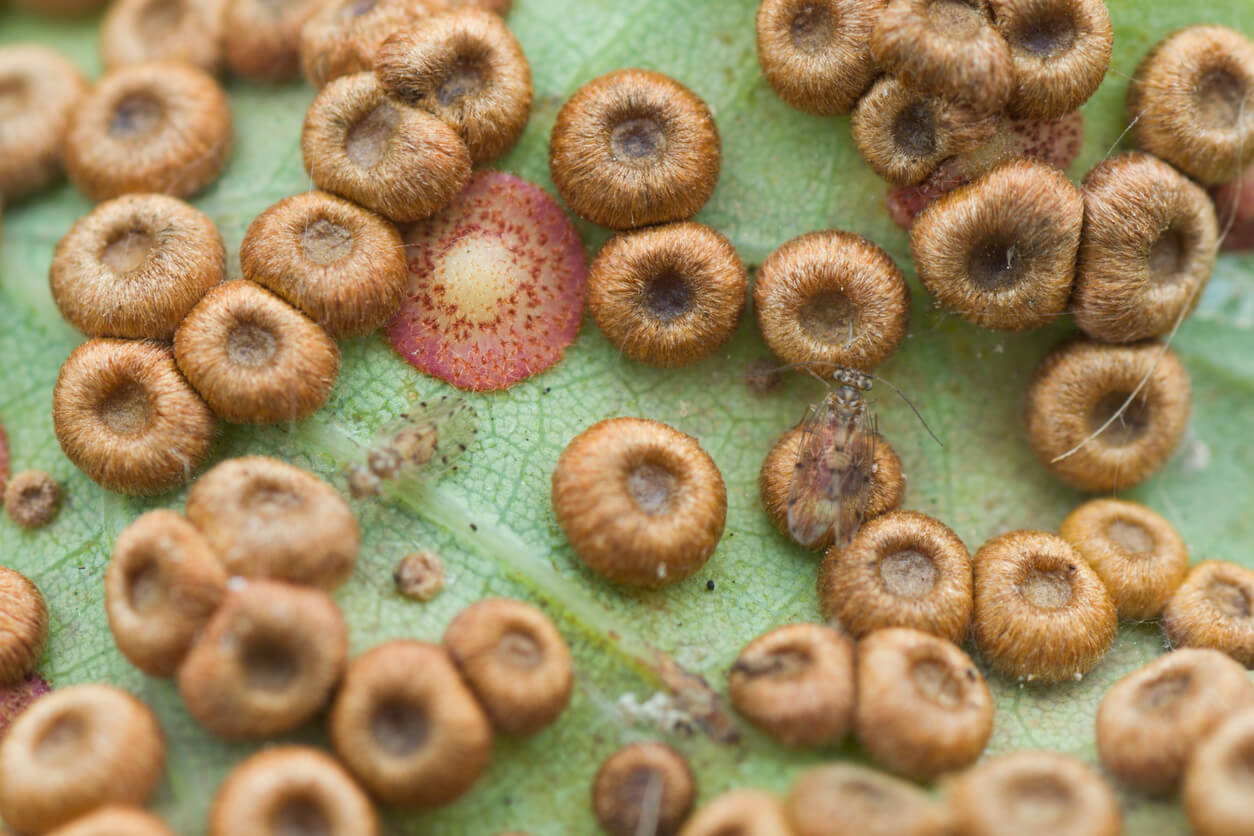
If you’ve spotted unusual fuzzy growths on your oak trees, you’re observing gall formations, fascinating biological interactions between specialized wasps and oak tissues. We’re looking at complex plant responses where the tree creates protective structures around wasp eggs and larvae. These growths vary dramatically in appearance, from woolly tufts to spiky orbs, depending on the specific gall wasp species involved. The relationship raises important questions about tree health and ecological significance that we’ll explore next.
Key Points
- Fuzzy growths on oak trees are typically oak galls formed when female gall wasps lay eggs and inject chemicals into tree tissues.
- These woolly or fuzzy galls serve as protective nurseries for developing wasp larvae, providing shelter and nourishment.
- While appearing concerning, most fuzzy oak galls cause minimal harm to healthy trees and rarely require treatment.
- Fuzzy galls contribute to local biodiversity by supporting beneficial predatory insects that help control garden pests naturally.
- Specific fuzzy oak galls include woolly oak galls, which have a cotton-like appearance on leaves or stems.
The Science Behind Oak Galls: Nature’s Curious Nurseries
While many people dismiss the odd-looking growths on oak trees as mere abnormalities, these structures, known scientifically as galls, represent a remarkable example of co-evolution between insects and plants.
When we examine oak galls closely, we’re witnessing tiny insect nurseries. Typically formed by gall wasps (Cynipidae family), these protective chambers develop when female wasps inject eggs alongside chemical compounds that hijack the tree’s growth mechanisms.
The oak responds by producing specialized tissue around the developing larvae, providing both shelter and nourishment.
What’s fascinating is that each gall-inducing species creates a distinctly shaped structure—woolly, spherical, spiky, or disc-like—that’s genetically programmed. We can often identify the specific insect responsible simply by observing the gall’s unique morphology. It’s a biological relationship that’s evolved over millions of years.
These fascinating structures contribute to the biodiversity of your landscape, attracting native wildlife that adds ecological value to lakefront New Orleans properties.
Common Types of Oak Galls You’ll Find in North America
On leaf undersides, you’ll find spiny oak galls (Andricus quercuspetiolicola).
Delicate spiny structures adorn oak leaf undersides, each a tiny insect nursery of Andricus quercuspetiolicola development.
Jumping oak galls (Neuroterus saltatorius) actually “jump” when detached due to larval movement inside.
Red oaks often display distinctive gouty oak galls on branches, which can persist for years.
These formations belong to our shared forest ecosystem, providing fascinating windows into the intricate relationships between insects and trees.
The larvae inside these galls remain in a dormant state until environmental conditions trigger their development and emergence.
The Life Cycle of Gall Wasps and Their Relationship With Oaks
The complex life cycle of oak gall wasps (family Cynipidae) represents one of nature’s most remarkable examples of specialized insect-plant coevolution. These tiny insects manipulate oak tissue by injecting chemical compounds during oviposition, inducing the tree to form protective structures around developing larvae.
Many Cynipidae species exhibit alternating generations—one sexual and one asexual—often requiring different oak species or tissues for each phase.
We’ve observed that spring galls typically house the sexual generation, while summer galls contain the asexual forms. The oak provides both shelter and nutrition, while the wasps generally cause minimal harm to their hosts.
This relationship has evolved over millions of years, creating the diverse gall morphologies we find in our oak woodlands—from woolly marble galls to spiny asterisks that many of us discover on our neighborhood trees.
Similar to how proper timing enhances the effectiveness of lawn fertilization, the seasonal cycle of gall wasps is perfectly synchronized with their host oak’s growth patterns.
Do Oak Galls Harm Your Trees? Understanding the Impact
Despite the intricate coevolutionary relationship between gall wasps and oak trees, many homeowners and arborists wonder about potential negative effects when they discover these unusual growths on their trees.
We’re pleased to report that most oak galls cause minimal harm. The tree’s overall health typically remains unaffected by these specialized structures. However, certain conditions warrant monitoring:
| Gall Type | Severity | Recommendation |
|---|---|---|
| Leaf galls | Low | No action needed |
| Twig galls | Moderate | Monitor branch dieback |
| Root galls | High | Consult arborist immediately |
While extensive gall formations can occasionally cause leaf drop or twig dieback, healthy trees compensate for these minor stresses. Only when trees face additional environmental stressors—drought, disease, or nutrient deficiencies—might galls contribute to declining vigor. We recommend maintaining good cultural practices rather than treating most gall occurrences. When selecting replacement trees, consider incorporating native plants which are typically more resilient to local pests and require less maintenance in Harahan’s climate.
Historical Uses of Oak Galls: From Ink to Medicine
While we often view oak galls as mere tree curiosities today, these structures served vital historical functions as key ingredients in iron gall ink production from the 5th to 19th centuries.
Traditional healers across cultures utilized oak galls’ astringent properties to treat ailments ranging from hemorrhoids to mouth ulcers through tinctures, poultices, and oral preparations.
Beyond medicinal and writing applications, oak galls provided essential tannins for leather production and created lasting fabric dyes, particularly in black and brown color ranges.
Similar to how oak galls offer ecological benefits, native plants contribute to the resilience and ecological balance of River Ridge landscapes when integrated thoughtfully.
Medieval Ink Production
Throughout medieval Europe, iron gall ink dominated manuscript production, with oak galls serving as the essential ingredient in its formulation. Scribes would crush these galls, then mix them with ferrous sulfate (vitriol), gum arabic, and water to create a permanent, carbon-rich ink.
We can still see this deep black-blue substance on countless manuscripts that have survived for centuries.
The process wasn’t simply pragmatic but communal—monasteries developed their own formulations, with recipes passed between scriptoria through networks of religious houses.
The ink’s longevity and resistance to fading made it ideal for important documents, from royal charters to religious texts.
When we examine medieval manuscripts today, we’re witnessing the remarkable chemistry of oak galls—nature’s response to wasp intrusion transformed into humanity’s most enduring written legacy.
Folk Healing Traditions
Beyond their function in inking manuscripts, oak galls held prominent positions in European folk pharmacopeia from antiquity through the early modern period. Their high tannin content made them valuable astringents for treating wounds, burns, and hemorrhoids. We’ve found evidence that practitioners crushed galls into poultices for inflammation or brewed them into teas for dysentery and diarrhea.
In our communities, oak galls weren’t just medicinal—they represented connections to ancestral wisdom. Women often employed them for postpartum bleeding and ulcerated gums, while barber-surgeons valued their styptic properties. They’re particularly mentioned in Culpeper’s herbal texts and the Salernitan Regimen.
These applications weren’t mere superstition; modern analysis confirms their antimicrobial and anti-inflammatory properties, validating what our forebears intuitively understood about these curious tree growths.
Tanning and Dyeing
Oak galls served as essential components in traditional tanning and dyeing processes due to their exceptionally high tannin content, which ranges from 50-70% in properly harvested specimens. These tannins create permanent chemical bonds with protein fibers, making them ideal for transforming animal hides into durable leather.
We’ve long utilized oak gall extracts to produce rich blacks, grays, and browns in textile dyeing, particularly for wool and silk. When combined with iron sulfate (copperas), they create a stable black dye that resists fading.
For centuries, artisans across Europe and Asia have harvested these growths specifically for their consistent dyeing properties.
While synthetic alternatives have largely replaced gall-based tannins in commercial applications, we’re witnessing a resurgence among traditional craftspeople seeking authentic, historically accurate materials for heritage leather and textile work.
Beneficial Insects: The Ecological Role of Galls in Your Garden
We’ve observed that galls serve as micro-habitats for predatory insects that hunt garden pests, contributing substantially to the natural pest management ecosystem.
These beneficial predators, including parasitoid wasps and predaceous mites, establish essential predator-prey relationships that help regulate populations of harmful insects such as aphids and caterpillars.
The intricate ecological web formed around oak galls can maintain garden health by supporting biodiversity that naturally limits pest outbreaks without chemical interventions.
Similar to how proper soil drainage affects overall plant resilience, these natural predator communities thrive best when the surrounding environment provides optimal conditions for their development and activity.
Nature’s Pest Controllers
While gardeners often view galls as concerning growths, they actually serve as microhabitats for numerous beneficial insects that function as natural pest controllers in your garden ecosystem.
These gall-dwelling predators include parasitoid wasps, predatory mites, and certain species of beetles that target common garden pests.
We’ve observed that oak galls specifically harbor tiny chalcid wasps that parasitize caterpillars, aphids, and scale insects—all notorious for damaging ornamental plants.
A single oak hosting multiple galls can support a significant population of these natural enemies, reducing the need for chemical interventions in your garden.
Predator-Prey Balance
The intricate predator-prey relationships established within oak galls contribute substantially to maintaining ecological balance in garden ecosystems. These miniature habitats foster natural pest control systems that reduce our need for chemical interventions.
When we examine gall communities closely, we’re witnessing evolution’s perfect pest management solution:
- Parasitoid wasps target and eliminate gall-forming insects, preventing overpopulation
- Predatory beetles consume larvae within galls, creating a second tier of control
- Birds extract insects from mature galls, particularly during winter when food sources are scarce
- Hyperparasites (parasites of parasites) regulate beneficial insect populations, preventing any single species from dominating
We’re fortunate to observe these complex interactions in our gardens. By preserving these relationships, we’re not just protecting our oak trees—we’re maintaining biodiversity that’s evolved over millions of years.
Seasonal Changes: When and Why Oak Galls Appear
During late spring and early summer months, oak gall formation begins its predictable cycle, coinciding with the egg-laying behavior of gall wasps (Cynipidae).
We’ll notice these structures developing as female wasps inject their eggs into young leaf tissue, bud tissue, or developing acorns, depending on the specific gall wasp species.
The plant’s response varies seasonally. Spring-initiated galls often develop rapidly, reaching full size within weeks as hormonal chemicals from the larvae trigger abnormal cell growth.
In contrast, fall-induced galls may remain dormant through winter, resuming development when oak metabolism accelerates in spring.
We’re witnessing a remarkable timing adaptation—the wasps have evolved to synchronize their reproduction with specific oak growth stages, ensuring ideal nutritional conditions for their offspring.
This seasonal pattern repeats annually in our oak ecosystems.
Similar to how proper drainage solutions prevent water pooling in your yard, oak trees have natural mechanisms to manage these gall formations.
Should You Remove Oak Galls? Management Considerations
Now that we recognize the biological timing of oak gall formation, we’ll address a common question property owners face: whether to remove these structures from affected trees.
While galls rarely pose serious threats to mature oaks, management decisions should be based on several key factors:
- Tree health assessment – Monitor overall vigor, as healthy trees typically tolerate gall infestations without significant stress.
- Infestation severity – Intervene only when gall density reaches levels that affect photosynthesis or branch integrity.
- Structural considerations – Remove galls when they cause branch dieback or compromise limb stability.
- Timing of intervention – Schedule removal during dormant periods to minimize stress on the host tree.
For most oak enthusiasts in our community, selective pruning of heavily galled branches provides sufficient control without risking unnecessary damage to these valuable landscape assets.
Proper selective pruning techniques in winter can significantly reduce disease risk while addressing gall issues during the tree’s dormancy.
Frequently Asked Questions
Can Oak Galls Affect Pets or Children Playing Near Trees?
Oak galls aren’t toxic to pets or children. We’ve observed that these tree growths pose minimal risk during play activities, though we’d recommend avoiding consumption as a precautionary measure.
Do Oak Galls Attract Other Pests to My Yard?
Oak galls typically don’t attract significant pest populations to your yard. We’ve observed that while some parasitoid wasps may visit galls, they’re actually beneficial insects that help maintain natural ecological balance in our landscapes.
Can I Use Oak Galls Found in My Yard for Crafts?
We can repurpose oak galls for crafts, including natural dye extraction, jewelry components, and decorative elements. They’re excellent for botanical arrangements. guarantee they’re thoroughly dried before incorporating into your DIY projects.
Do Certain Weather Conditions Increase Oak Gall Formations?
Yes, we’ve observed that drought stress, high humidity, and mild winters substantially increase oak gall formations, as these conditions enhance gall wasp reproduction and compromise trees’ defensive responses to their oviposition.
How Do Oak Galls Differ From Other Tree Growths Like Burls?
We distinguish oak galls from burls by their origin: galls result from insect-induced hormonal responses, while burls develop from abnormal cambium cell division triggered by stress, disease, or genetic factors.
Takeaway
Oak galls represent a fascinating intersection of entomology and plant physiology that we’ve examined throughout this article. We’ve documented their complex formation processes, diverse morphologies, and ecological significance within forest ecosystems. While they’re generally benign to host trees, we’ve outlined specific management protocols for situations where intervention becomes necessary. We trust this complete analysis provides you with sufficient technical understanding to accurately identify and appropriately respond to these remarkable arthropod-induced plant structures in your landscape.