Virginia buttonweed has earned its reputation as one of the most challenging lawn weeds to control. We’ve seen how this persistent perennial can quickly overtake a lawn with its spreading root system and ability to reproduce through multiple pathways. It’s particularly troublesome in warmer, humid regions where it thrives in poorly drained areas. Let’s examine the most effective Virginia Buttonweed control strategies that combine cultural practices and targeted chemical treatments to reclaim your turf.
Key Points
- Apply selective herbicides containing metsulfuron-methyl or a combination of 2,4-D, dicamba, and mecoprop for effective control.
- Improve drainage and reduce soil compaction through core aeration to discourage buttonweed growth in wet areas.
- Maintain proper mowing heights for your grass type to promote thick, competitive turf that resists weed invasion.
- Schedule multiple herbicide applications 3-4 weeks apart during spring and summer when buttonweed is actively growing.
- Water deeply but infrequently to encourage deep turfgrass root systems that outcompete buttonweed’s aggressive growth.
What Is Virginia Buttonweed and Why Is It So Problematic?
Virginia buttonweed (Diodia virginiana) stands as one of the most aggressive and difficult-to-control broadleaf weeds affecting turfgrass throughout the southeastern United States. This perennial weed thrives in both dry and wet environments, though it shows particular vigor in poorly drained, moist areas where lawns are already stressed.
What makes buttonweed especially problematic is its multifaceted reproduction strategy. It spreads through seeds, roots, and stem fragments, allowing it to quickly establish extensive networks underground while colonizing the surface. Even after mowing, fragmenting the plant often accelerates its spread rather than controlling it. The weed’s low-growing habit helps it evade mower blades while its deep taproot system makes hand-pulling ineffective. We’ll need targeted strategies to tackle this persistent invader. For homeowners seeking immediate control, applying selective herbicides like metsulfuron or Celsius WG during spring months provides the most effective results against established infestations.
Key Characteristics for Proper Identification
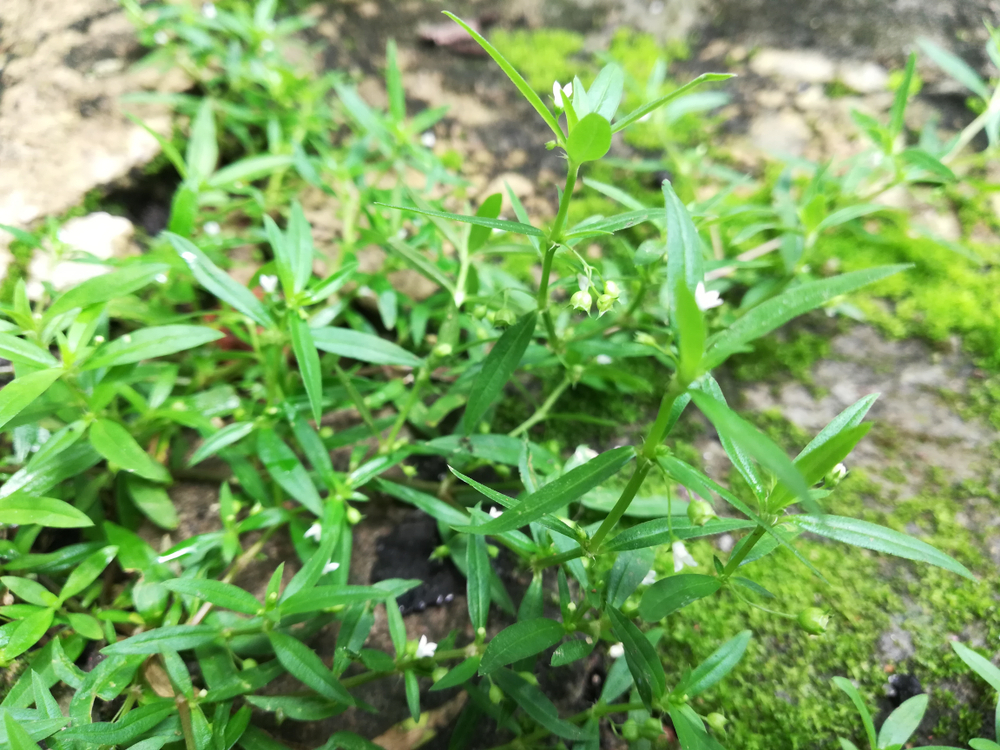
Virginia buttonweed can be identified by its opposite, lance-shaped leaves with distinctive white veins and small, four-petaled white flowers that appear from late spring through fall.
We’ll note that mature plants develop both above-ground and underground flowers, contributing to its aggressive reproduction through seeds and extensive root systems.
Its low-growing, mat-forming growth habit allows it to spread rapidly across lawns, often creating dense patches that can withstand mowing and outcompete desirable turf grasses.
Implementing regular lawn maintenance and proper mowing heights can help prevent buttonweed from establishing in your healthy turf.
Visual Identification Features
Accurate identification of Virginia buttonweed (Diodia virginiana) remains crucial for implementing effective control strategies. This persistent perennial weed displays opposite, lance-shaped leaves with prominent veins and slightly wavy margins. You’ll notice leaves are 1-3 inches long, with short hairs along the leaf edges and midrib.
The plant forms a low-growing, mat-like structure with stems that root at nodes when they contact soil. Its white, star-shaped flowers (¼-inch across) have four petals and appear from May through October. After flowering, Virginia buttonweed produces distinctive twin seedpods that resemble small buttons, hence its common name.
We recommend examining the undersides of leaves for the characteristic purplish coloration that often develops, particularly during periods of stress or cooler temperatures—a distinctive trait that helps differentiate it from similar-looking lawn weeds.
Growth and Spread Patterns
When establishing itself in lawns and landscapes, Virginia buttonweed employs multiple reproductive strategies that make it particularly difficult to eradicate. This persistent perennial spreads through seeds, root fragments, and stems that root at nodes when in contact with soil. Each plant can produce up to 25,000 seeds annually, which remain viable in soil for years.
We’ll notice buttonweed thrives in poorly drained, compacted, or frequently irrigated areas. It forms dense, low-growing mats that expand radially, often reaching 4-6 feet in diameter. During summer months, growth accelerates dramatically, allowing patches to double in size within weeks. The plant’s extensive root system penetrates up to 12 inches deep, storing nutrients that support regrowth after surface damage. This aggressive growth pattern enables buttonweed to outcompete desirable turfgrasses, especially in humid conditions.
The Growth Cycle and Spreading Mechanisms
Virginia buttonweed’s resilience stems from its dual seed production methods—above-ground capsules and self-pollinating underground flowers—combined with its sprawling root system that easily fragments and regenerates.
We’ll examine how these reproductive strategies allow buttonweed to establish persistent colonies that evade conventional control methods.
During summer months, this perennial weed accelerates its growth pattern, rapidly forming dense mats that outcompete desirable turfgrass through both vertical and horizontal expansion.
Implementing proper crop rotation can help disrupt the weed’s life cycle and prevent it from establishing in your lawn.
Seed Production Methods
The prolific seed production of Virginia buttonweed represents one of its most formidable survival mechanisms. Each plant produces two distinct types of seeds: above-ground seeds from small white flowers (typically 1-4 seeds per fruit) and underground cleistogamous flowers that self-pollinate without opening.
This dual strategy guarantees reproduction regardless of environmental conditions.
We’ve observed that a single buttonweed plant can generate thousands of seeds annually, with viability lasting up to 3 years in soil. Seeds develop quickly after flowering, typically maturing within 10-14 days. Even more concerning, these seeds remain viable after passing through animal digestive systems, allowing for widespread distribution via birds and other wildlife.
What makes buttonweed particularly resilient is its ability to produce seeds even when regularly mowed, as flowers develop close to the ground beneath typical cutting heights.
Underground Root System
Beyond its prolific seed production, Virginia buttonweed develops an extensive underground root system that enables remarkable persistence and spread. We’re dealing with a perennial weed that creates deep primary taproots extending 8-12 inches into the soil, with numerous secondary lateral roots branching horizontally.
These lateral roots contain dormant nodes that can initiate new shoots when the main plant is damaged or removed.
What makes this underground network particularly challenging is its ability to store carbohydrate reserves, allowing the plant to regenerate after surface treatments.
Even small root fragments left behind after pulling can sprout new plants. The root system also helps the weed survive drought conditions when turfgrass may be weakened. We’ll need to address this subterranean structure directly in our control strategy to achieve lasting results.
Summer Growth Pattern
During peak summer months, Virginia buttonweed exhibits its most aggressive growth pattern, typically accelerating from late May through September when temperatures consistently exceed 80°F. This weed’s remarkable adaptability allows it to thrive in both drought conditions and overly saturated soils that would stress most lawn grasses.
We’ll notice buttonweed forms dense, mat-like growth that spreads rapidly through multiple mechanisms. The plants produce seeds above ground while simultaneously developing fruit underground—a unique survival strategy.
Each stem node that contacts soil can root independently, while existing roots fragment easily during cultivation, creating new plants. Additionally, its four-petaled white flowers quickly shift to seeds that remain viable for years.
This multi-pronged reproductive approach explains why we often see buttonweed return persistently despite our initial control efforts.
Cultural Control Methods for Long-Term Management
While chemical treatments provide immediate results, cultural control methods form the backbone of any long-term Virginia buttonweed management strategy. We’ve found that maintaining a thick, healthy lawn creates natural competition that inhibits buttonweed establishment. Mow at the proper height for your grass type (3-4 inches for tall fescue, 2-2.5 inches for bermudagrass) and follow appropriate seasonal fertilization schedules.
Improve drainage in wet areas where buttonweed thrives by adding topsoil or installing drainage solutions. Core aeration twice yearly reduces soil compaction, allowing grass roots to penetrate deeper and outcompete the weed. Water deeply but infrequently (1-1.5 inches weekly) to encourage deep root growth in desirable turf. For persistent wet areas, consider installing a French drain system to manage excess water without damaging your landscape. These practices, consistently applied, will substantially reduce buttonweed pressure over time in our lawns.
Chemical Treatment Options and Their Effectiveness
Chemical treatments provide targeted intervention when Virginia buttonweed has established beyond what cultural practices alone can manage. We recommend applying selective herbicides containing these active ingredients for ideal control:
- 2,4-D + dicamba + mecoprop (three-way herbicides) – Effective on young plants, requires multiple applications
- Metsulfuron-methyl (MSM) – Superior control with systemic action that targets the extensive root system
- Sulfentrazone – Quick visible results on mature buttonweed when temperatures exceed 85°F
- Quinclorac – Particularly effective when mixed with MSM or three-way herbicides for enhanced control
For best results, we’ll need to apply these herbicides when buttonweed actively grows (May through September).
Always follow label directions precisely regarding application rates, timing, and safety precautions.
Remember that repeated applications are typically necessary for complete eradication. Consider implementing integrated pest management principles to combine chemical treatments with preventive strategies for long-term control.
Timing Your Control Efforts for Maximum Impact
Strategic timing of control measures substantially influences the success rate against Virginia buttonweed infestations. We recommend applying pre-emergent herbicides in early spring (mid-March to April) when soil temperatures reach 55°F to prevent seed germination. For post-emergent treatments, target the plant during its active growth phase in late spring through summer when temperatures consistently reach 80°F+.
Don’t wait until fall when the weed has already produced seeds. Multiple applications are necessary—schedule them 3-4 weeks apart during the growing season. After herbicide application, avoid mowing for at least 48 hours to maximize absorption. If you’re implementing cultural controls like aeration or dethatching, coordinate these in spring before treatment begins. Consider using selective mulching around landscaped areas to prevent buttonweed from spreading while simultaneously conserving soil moisture.
Creating a Multi-Season Control Strategy
Successful eradication of Virginia buttonweed requires a thorough multi-season approach rather than a one-time treatment solution.
We’ve found that persistent monitoring and sequential treatments across growing seasons provide the most effective control of this stubborn perennial weed.
- Spring Strategy – Apply pre-emergent herbicides as soil temperatures reach 55°F to prevent seedling establishment while targeting visible growth with selective post-emergents.
- Summer Campaign – Intensify control with scheduled spot treatments every 3-4 weeks, focusing on mature plants before they flower and seed.
- Fall Offensive – Apply systemic herbicides when buttonweed is translocating nutrients to rootstock, ensuring chemical delivery to underground structures.
- Winter Preparation – Strengthen turf density through proper fertilization and higher mowing heights to create competition against spring regrowth.
Consider implementing proper water management systems to prevent the soggy soil conditions where Virginia buttonweed tends to thrive.
Preventing Reinfestation After Successful Control
After putting in the effort to control Virginia buttonweed, maintaining vigilance becomes critical to prevent this persistent weed from reestablishing in your lawn. We recommend establishing a regular monitoring schedule, particularly during spring and early summer when new seedlings emerge.
Inspect previously infested areas weekly and immediately remove any buttonweed plants you spot. Continue proper lawn maintenance practices: mow at appropriate heights for your grass type, avoid overwatering, and follow a consistent fertilization program. These practices strengthen your turf’s ability to outcompete emerging buttonweed.
Consider applying a pre-emergent herbicide in early spring to prevent seed germination, focusing on previously affected areas. Always clean your mowing equipment thoroughly after cutting infested sections to prevent spreading seeds to buttonweed-free zones. Remember that buttonweed seeds can remain dormant for decades until environmental conditions become favorable for their germination.
When to Consider Professional Lawn Care Services
Severe infestations of Virginia buttonweed often indicate that the weed has established extensive underground root systems and seed banks, making DIY control methods increasingly ineffective.
Professional lawn care services might be your best option when facing overwhelming buttonweed invasion.
Consider contacting professionals when:
- The buttonweed covers more than 50% of your lawn area
- You’ve attempted multiple herbicide applications without significant reduction
- Your soil requires thorough testing and specialized amendment protocols
- Time constraints prevent you from implementing the consistent, multi-season approach required for successful control
Professional services typically offer integrated management plans, utilizing commercial-grade herbicides and specialized equipment unavailable to homeowners.
They’ll also provide ongoing monitoring to prevent reinfestation, ultimately saving you time and frustration in your battle against this persistent weed.
When selecting a lawn care professional, ensure they have proper insurance coverage to protect both parties during the treatment process.
Frequently Asked Questions
Is Virginia Buttonweed Toxic to Pets or Children?
We haven’t found Virginia buttonweed to be toxic to pets or children. It’s non-poisonous, so you needn’t worry about accidental ingestion in your lawn spaces where family members play.
Can Buttonweed Spread to Garden Beds From My Lawn?
Yes, Virginia buttonweed can spread to garden beds from your lawn. We’ve observed its aggressive colonization through seeds, stem fragments, and underground networks. Let’s monitor those landscape boundaries vigilantly.
Will Virginia Buttonweed Die During Winter Months?
Virginia buttonweed doesn’t die in winter but becomes dormant. We’ll notice its perennial roots survive underground, ready to emerge when temperatures rise. That’s why we need consistent control strategies year-round.
Are Organic Control Methods Effective Against Virginia Buttonweed?
We’ve found organic methods like hand-pulling, smothering with mulch, and corn gluten meal to have limited effectiveness against Virginia buttonweed. For severe infestations, we’ll often need targeted organic herbicides containing clove oil.
How Quickly Will Virginia Buttonweed Return After Treatment?
We’ll typically see Virginia buttonweed resurface within 3-8 weeks post-treatment, depending on soil conditions, treatment efficacy, and seasonal growth patterns. Multiple applications are often necessary for lasting control.
Takeaway
We’ve outlined a thorough approach to tackling Virginia buttonweed that integrates cultural practices with targeted chemical applications. By maintaining proper mowing height, improving drainage, and applying selective herbicides like metsulfuron at ideal timing, we’re creating conditions unfavorable for this persistent weed. Remember, we’re not seeking a quick fix—we’re implementing a systematic, multi-season strategy that addresses both the symptoms and underlying causes of buttonweed infestation.