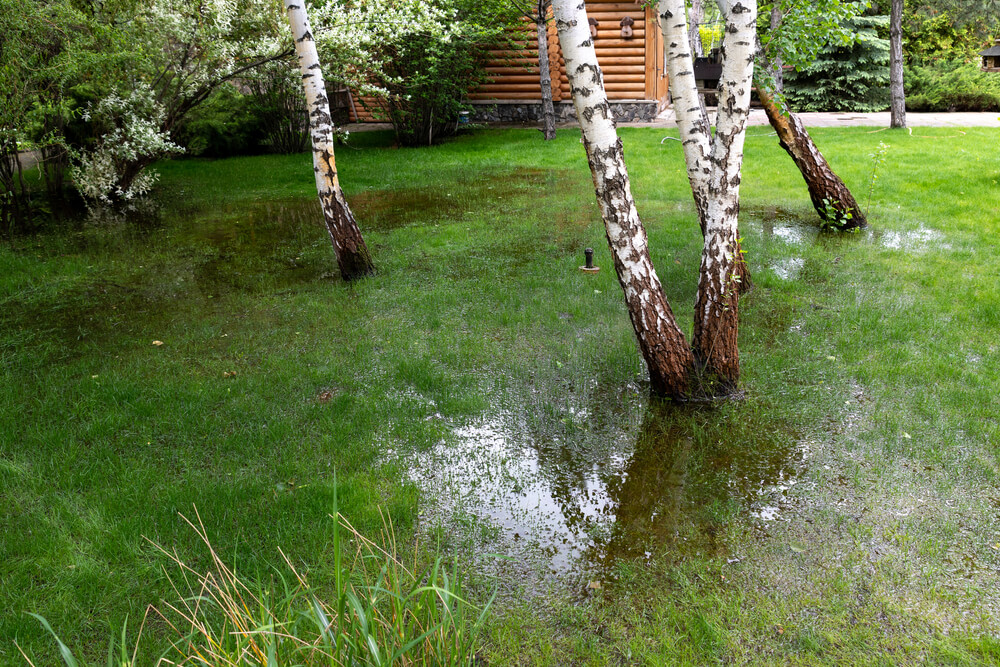
At Cleancut Landscape Co, we’ve seen how backyard flooding can devastate properties and frustrate homeowners. Standing water doesn’t just damage structures—it creates mosquito breeding grounds and kills valuable plants. We’ve developed thorough solutions that address the root causes of poor drainage rather than just treating symptoms. Our expertise combines technical knowledge with aesthetic design principles to transform water problems into sustainable landscape features. What’s causing the water to pool in your yard?

Key Points
- French drains with proper slope redirect water underground, protecting foundations and eliminating standing water in problematic yards.
- Strategic grading and resloping redirects water away from structures with optimal gradients of 2-5% to prevent flooding.
- Permeable hardscaping options like pavers and porous concrete allow water infiltration at rates of 3-5 gallons/minute/square foot.
- Rain gardens filled with native plants capture the first inch of rainfall while enhancing aesthetics and filtering pollutants.
- Regular maintenance including quarterly drainage inspections, annual soil aeration, and proper mulching prevents future flooding issues.
Understanding the Causes of Backyard Water Retention
Before implementing solutions to address backyard flooding, we must identify the underlying causes of water retention. Poor soil drainage is often the primary culprit, particularly in areas with heavy clay composition that impedes water infiltration. Your yard’s topography also plays a critical role—depressions and inadequate grading can create pools where water collects rather than flowing away from structures.
Factors like impermeable surfaces (concrete patios, driveways) increase runoff while reducing natural absorption. Compacted soil from foot traffic or construction can similarly restrict water movement. In many cases, inadequate or blocked drainage systems exacerbate these issues.
Even high water tables and seasonal precipitation patterns contribute to persistent moisture problems in your outdoor space. We’ll assess these factors at your property to develop targeted mitigation strategies. Understanding these common drainage issues helps us develop drainage solutions that prevent potential structural damage from water seepage.
Property Assessment: Identifying Your Drainage Problem Areas
Before implementing drainage solutions, we’ll need to conduct a thorough property assessment using a systematic checklist that identifies problem areas.
We should observe your yard during rainfall events to document water flow patterns, noting where water pools, how it moves across the landscape, and which areas remain saturated longest.
These observations will reveal the underlying drainage issues specific to your property, enabling us to develop targeted remediation strategies rather than applying generic solutions.
For optimal landscape performance, we recommend planting on a gentle slope to ensure proper drainage and protection, similar to techniques used with crepe myrtles and other water-sensitive plantings.
Property Assessment Checklist
Accurately identifying problem areas stands as the first critical step toward implementing effective drainage solutions for your backyard.
We’ve developed a thorough checklist to help you assess your property’s specific challenges:
- Document water pooling locations after rainfall
- Measure slope gradients away from your home’s foundation
- Identify impermeable surfaces contributing to runoff
- Check for clogged gutters and downspouts
- Examine soil composition and permeability rates
- Note areas where vegetation struggles to grow
- Inspect existing drainage systems for blockages
- Map underground utility lines before planning solutions
- Record seasonal variations in water accumulation
- Evaluate neighboring properties’ drainage impacts
We recommend conducting this assessment during various weather conditions to gain a complete understanding of your yard’s hydrology.
This methodical approach ensures we’ll design drainage solutions precisely tailored to your property’s unique needs.
Water Flow Patterns
Understanding water flow patterns across your property reveals the fundamental dynamics behind persistent backyard flooding issues. We examine how water travels from the highest to lowest points, identifying natural watersheds and problematic collection areas.
During our assessment, we’ll observe how rainwater interacts with your landscape’s contours, hardscaping elements, and existing drainage systems. We’re looking for key indicators like erosion channels, sediment deposits, and water stains that expose recurring flow paths.
French Drains: The Invisible Water Management Solution
When water infiltration plagues your backyard, a French drain can provide an elegant, subsurface solution that works continuously without visual intrusion.
We design these systems to redirect water through a perforated pipe surrounded by gravel, safely channeling moisture away from problem areas.
Our professional installations follow three critical steps:
- Strategic placement – We analyze your yard’s topography to position drains at desirable collection points
- Proper materials – We use commercial-grade fabrics, pipes, and aggregate that won’t degrade or clog
- Correct slope calculation – We ensure a minimum 1% grade for efficient gravity-driven drainage
French drains integrate seamlessly into your landscape while protecting your property’s foundation, preventing soil erosion, and eliminating standing water.
You’ll join countless homeowners who’ve reclaimed their outdoor spaces through this proven water management technique.
Unlike artificial turf that can develop drainage issues if not properly installed, French drains provide reliable water management with minimal maintenance requirements.
Rain Gardens: Beautiful Solutions to Excess Water
While French drains work underground to manage water, rain gardens transform excess moisture into vibrant landscape features visible throughout your property. These strategically designed depressions, filled with native plants and porous soil, capture runoff and allow it to slowly infiltrate back into the ground.
We design rain gardens to handle the first inch of rainfall—typically containing the highest concentration of pollutants. The plants we select are both water-tolerant and drought-resistant, ensuring year-round appeal.
Beyond their aesthetic value, rain gardens provide habitat for beneficial insects and birds while filtering contaminants from runoff.
When professionally integrated into your landscape plan, a rain garden reduces standing water without appearing utilitarian. We’ll help you position these features where they’ll capture maximum runoff while enhancing your outdoor living space.
Regular soil amendments can improve your rain garden’s effectiveness by enhancing soil structure and increasing nutrient availability for plants.
Grading and Resloping: Redirecting Water Flow Naturally
If your backyard suffers from persistent flooding, proper land grading and resloping represent one of the most fundamental solutions to redirect water away from structures and problem areas. When implemented correctly, this approach works with nature to guide excess water toward appropriate drainage points.
We recommend evaluating your property’s topography before initiating any grading work. Our professional team follows these essential steps:
- Conduct a thorough site survey using laser leveling equipment to identify low spots and problematic drainage patterns.
- Calculate ideal slope gradients (typically 2-5% away from foundations) based on soil composition and regional precipitation data.
- Implement precise grading using specialized equipment while preserving existing vegetation where possible.
This natural solution requires minimal maintenance once completed and provides long-term protection against water intrusion and soil erosion. Integrating shallow ditch systems can significantly enhance surface runoff management in areas with heavy precipitation.
Permeable Hardscaping Options for Improved Drainage
Traditional hardscaping materials like concrete and asphalt exacerbate flooding by creating impermeable surfaces that prevent water absorption and accelerate runoff. We recommend switching to permeable alternatives that maintain functionality while allowing water to naturally percolate into the soil.
| Material | Benefits | Cost Range |
|———-|———-|————|
| Permeable Pavers | High durability, various designs | $10-20/sq ft |
| Gravel Systems | Excellent drainage, low cost | $3-5/sq ft |
| Porous Concrete | Looks like standard concrete, allows 3-5 gal/min/sq ft | $8-12/sq ft |
These solutions help our community manage stormwater responsibly. By installing permeable hardscaping, you’re not just protecting your property from flooding—you’re contributing to neighborhood drainage solutions and reducing municipal water management burdens. Implementing rain gardens in conjunction with permeable surfaces can further enhance your property’s ability to manage stormwater runoff effectively.
Sustainable Plant Selection for Flood-Prone Areas
Choosing the right plants for flood-prone areas serves as an essential strategy in managing excess water while enhancing your landscape’s resilience. We recommend native species that naturally thrive in periodically saturated soils while developing extensive root systems that stabilize soil and absorb runoff.
At Cleancut Landscape, we’ve identified three categories of flood-tolerant plants that perform exceptionally well:
- Moisture-loving trees – River birch, bald cypress, and red maple establish deep roots while tolerating periodic standing water.
- Adaptable shrubs – Winterberry, buttonbush, and swamp azalea create visual interest while managing soil moisture.
- Ground-covering perennials – Sedges, rushes, and iris species prevent erosion while filtering pollutants from water.
We’ll help you create a layered planting design that’s both functional and aesthetically pleasing.
Properly selected vegetation works alongside proper grading techniques to establish a sustainable ecosystem that filters pollutants from runoff water.
Maintenance Practices to Prevent Future Flooding Issues
Even the most effective drainage systems and landscape designs require ongoing attention to maintain their flood-prevention capabilities.
We recommend inspecting drainage channels quarterly, removing debris and sediment that can obstruct water flow. Regular gutter cleaning prevents overflow that can saturate foundation areas.
Aerate your soil annually to improve percolation rates, particularly in compacted areas.
We’ve found that mulch maintenance—refreshing without exceeding 2-3 inches depth—prevents water-repelling crust formation while protecting soil structure.
Prune water-loving plants strategically to manage growth and water uptake.
Monitor irrigation systems for leaks or inefficiencies that could contribute to saturation.
Neglecting these maintenance practices can lead to soil erosion and foundation damage in your landscape.
Finally, conduct post-rain inspections to identify potential problem areas before they escalate into flooding concerns.
These proactive maintenance routines will considerably extend the lifespan of your drainage solutions.
Frequently Asked Questions
How Much Do Professional Backyard Drainage Solutions Typically Cost?
Professional backyard drainage solutions typically cost between $1,500-$5,000, depending on your yard’s size, terrain complexity, and selected system. We’ll help you find options matching your specific needs.
Can I Install Drainage Systems Myself to Save Money?
While DIY drainage installation is possible, we recommend professional assessment first. You’ll need technical knowledge of water flow patterns, soil composition, and proper materials to avoid costly future repairs.
How Long Until I See Results After Installing Drainage Solutions?
We’ll typically see results immediately after proper drainage installation. Most systems show effectiveness during the first rainfall, but ideal performance may require 1-2 storms to fully establish drainage patterns.
Will Flood Prevention Measures Affect My Property Value?
Yes, flood prevention measures typically increase property value. We’ve seen homes with proper drainage command higher prices and attract more buyers who value protection from water damage risks.
Are Drainage Solutions Covered by Homeowner’s Insurance?
Insurance typically doesn’t cover preventative drainage solutions, but they might cover flood damage repairs. We recommend checking your specific policy details and speaking with your insurance agent about coverage options.
Takeaway
At Cleancut Landscape Co, we’ve developed all-encompassing backyard flooding solutions that address both immediate drainage concerns and long-term water management. We implement technically advanced systems including French drains, strategically designed rain gardens, and precise grading to redirect water flow. Our permeable hardscaping and flood-tolerant plant selections work synergistically with natural water cycles. We’ll integrate these elements into a customized, sustainable drainage system that protects your property investment from backyard flooding for years to come.