At Clean Cut Landscape Co., we install French drains and catch basin drainage to solve standing water issues on Metairie properties. Understanding the difference between these two systems helps you choose the correct setup for your yard. While both methods manage excess water, they target different issues: French drains handle subsurface water that saturates your soil, whereas catch basins collect surface water that pools on top of your lawn. This article will explain how each system operates, how they compare, and how our professional team plans and installs them to protect your residential landscape.
Why Yard Drainage Matters in Metairie
Heavy rainfall in the New Orleans area often saturates residential lawns. When your yard holds standing water, the excess moisture drowns grass roots, leading to turf decay and bare soil patches. Over time, water pooling near your home can seep into concrete foundations or damage paved backyard patios.
Waterlogged soil also creates breeding grounds for mosquitoes and other pests. To prevent these problems, homeowners must direct excess water away from flat areas and foundations toward safe runoff points.
How French Drains and Catch Basins Work
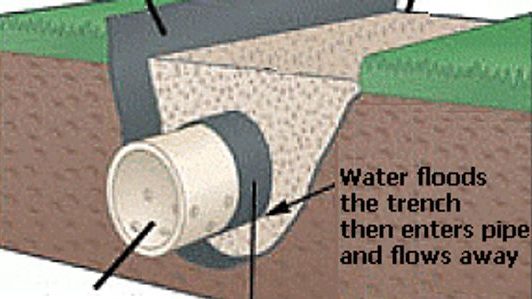
Each drainage system collects water differently. A French drain collects groundwater. To install a French drain, we dig a trench along the soggy area of your property. We line this trench with a geotextile fabric. We place a perforated PVC pipe at the bottom of the trench and fill the remaining space with clean gravel. Subsurface water seeps through the gravel, passes through the geotextile fabric, and enters the pipe through small holes. Gravity then carries the water through the pipe to a discharge location, such as a street gutter or a designated drainage ditch.
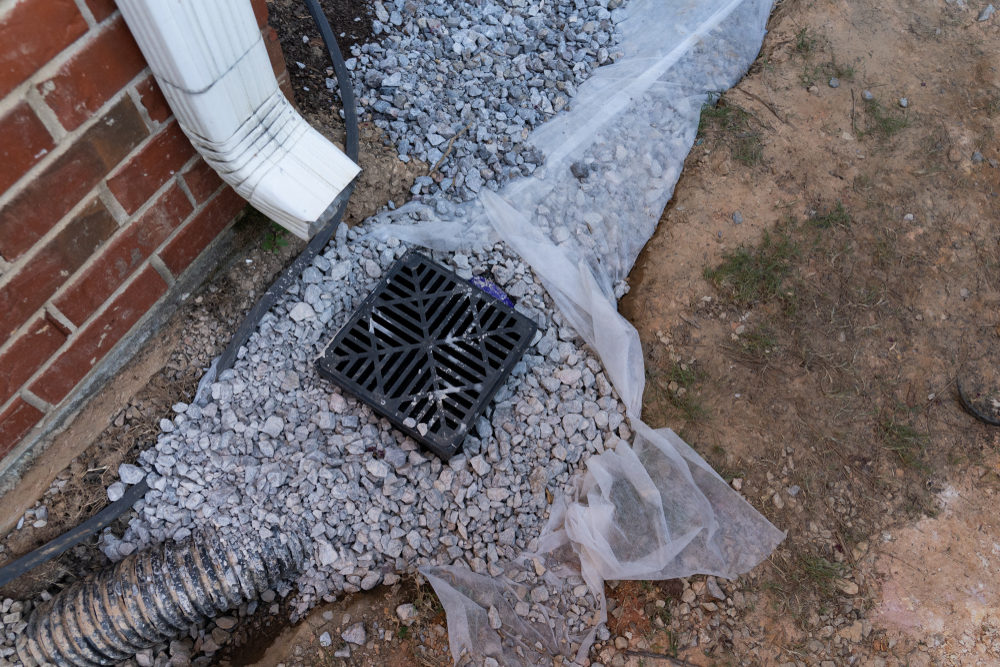
A catch basin collects surface water. A catch basin consists of a grated box set flush with the ground at a low point in your lawn or garden bed. Rainwater flows across your yard and enters the box through the top grate. Inside the basin, solid sediment and debris settle to the bottom of the box. The water rises above the sediment level and exits through a smooth, solid PVC pipe connected to the side of the box.
This pipe connects to a larger drainage network that carries the water away from your residential landscape.
What Customers Should Know About Drainage Systems
Planning a subsurface drainage system requires attention to grading, pipe materials, and yard layout. Water only flows downhill, meaning we must grade your lawn to ensure proper water movement toward the drain. We always use smooth, solid PVC pipe for our drainage networks. Many contractors install flexible, black corrugated pipe due to its low material cost. However, corrugated pipe has ridges that catch dirt, leaves, and tree roots, which blocks the water and leads to clogs. Corrugated pipe also crushes under heavy lawn equipment. Smooth PVC pipe has thick walls that resist crushing, and its slick interior allows water to flow quickly without snagging debris.
We also connect roof downspouts to the drainage network. Heavy rains pour thousands of gallons of water off your roof directly onto the soil near your foundation. Connecting downspouts to solid PVC pipes carries this roof water away before it can saturate your lawn or seep into your home. When we combine
downspout connections, grading, and lawn drains, we create a complete system that manages water before it becomes a problem.
Benefits of French Drains and Catch Basins
The choice between these two systems depends on the specific water issues in your yard. A French drain works best for soggy, saturated lawns where groundwater sits just below the surface. This system acts like an underground sponge that continuously pulls moisture out of the dirt. The concept of a French drain was first developed to manage agricultural fields, but the same principles apply to residential lawns today.
A catch basin works best for low spots that collect pooling surface water during heavy downpours. In many yards, we install a combined system that uses catch basins to clear surface pools and French drains to dry out soggy turf.
To help you compare these options, we have compiled a summary of their features:
| Feature | French Drain | Catch Basin |
| Water Source | Groundwater and saturated soil | Surface water and pooling rain |
| Main Component | Perforated PVC pipe and gravel | Grated collection box and solid PVC |
| Typical Location | Along wet lawn areas or flower beds | Low spots, patios, and downspouts |
| Collection Method | Slow seepage through gravel and holes | Direct flow into top grate |
What Makes Clean Cut Landscape Co. Different
We have designed and installed outdoor improvement projects in Metairie and the New Orleans area since 1986. Over nearly four decades, our owner-led team has built a reputation for practical, high-quality workmanship. When you hire us, you work directly with our owner, Mario Boesch. Mario personally conducts your paid landscape consultation, drafts your plan, and oversees our crews during the installation.
Our primary distinction is our integrated services. We coordinate your entire yard project under one team, including landscape design, PVC drainage, automatic sprinkler systems, Zoysia sod, and LED lighting.
Hiring separate contractors can lead to mistakes, such as a drainage crew cutting your sprinkler lines or a sod crew burying your catch basins. We handle every step, which keeps your grading, drainage, and irrigation lines aligned and protected.
We hold essential state credentials to protect your property, including Louisiana Landscape Horticulturist license number 1343 and Arborist license number 0785. Our company maintains an A+ rating and accreditation with the Better Business Bureau, which we have held since April 29, 2020. Homeowners across Metairie have shared 301 verified Google reviews describing our clear communication, neat jobsites, and successful yard drainage projects.
We stand behind our work with a written 5 STAR Warranty. Our drainage systems carry a five-year warranty on parts and labor. This warranty includes specific terms regarding parts and workmanship. Please note that while our systems direct typical heavy rainfall away from your lawn, no residential
system can eliminate all standing water during historic floods or extreme storms that overwhelm municipal sewers. We provide realistic expectations and durable designs rather than vague promises.
Related Services or Helpful Resources
If you want to upgrade your entire property, we can combine your drainage installation with our professional landscape design services. Solving your water issues first provides a stable foundation for new plantings and garden beds. For yards with old or damaged turf, we also offer custom sod installation using high-quality Zoysia grass to restore your lawn after we complete the drainage excavation.
FAQs About French Drains and Catch Basins
Can you connect roof downspouts directly to a French drain?
No, we do not connect roof downspouts to perforated French drain pipes. Downspouts carry large volumes of water and roof debris, which can clog a perforated pipe or oversaturate the surrounding soil. Instead, we connect downspouts to separate, solid PVC pipes that carry the water directly to your main discharge point.
How long does a PVC drainage system last?
A professional system built with smooth, solid PVC pipe can last for decades. Unlike cheap corrugated pipe, solid PVC resists crushing and does not have ridges that trap sediment. This durability keeps the water flowing freely, which cuts down on future maintenance and repairs.
Will a new drainage system keep my yard dry during a hurricane or major flood?
No residential drainage system can eliminate all water during extreme weather events. Our systems are designed to manage heavy local rainfalls, but major storms can overwhelm the public street drains. If the street drains fill with water, your yard pipes will temporarily hold water until the municipal system recedes.
How do we know if our yard needs grading or a drainage system?
We assess your yard during our on-site consultation to find low spots and slope issues. Often, flat yards with dense clay soil require both grading and subsurface drains. Grading slopes the soil toward our catch basins, allowing surface water to reach the drain pipes instead of forming puddles.
Takeaway
Solving wet yard problems in the New Orleans area requires a professional assessment and integrated outdoor solutions. Choosing between a French drain and a catch basin depends on the type of water issue on your property. You may need to drain saturated soil or collect pooling surface runoff. At Clean Cut Landscape Co., we combine drainage expertise with full landscape planning, sod installation, and professional irrigation setup. This integrated approach protects your lawn, keeping all yard systems operating together properly. To request an on-site landscape consultation with Mario Boesch to evaluate your property, call or text us at (504) 415-1438.