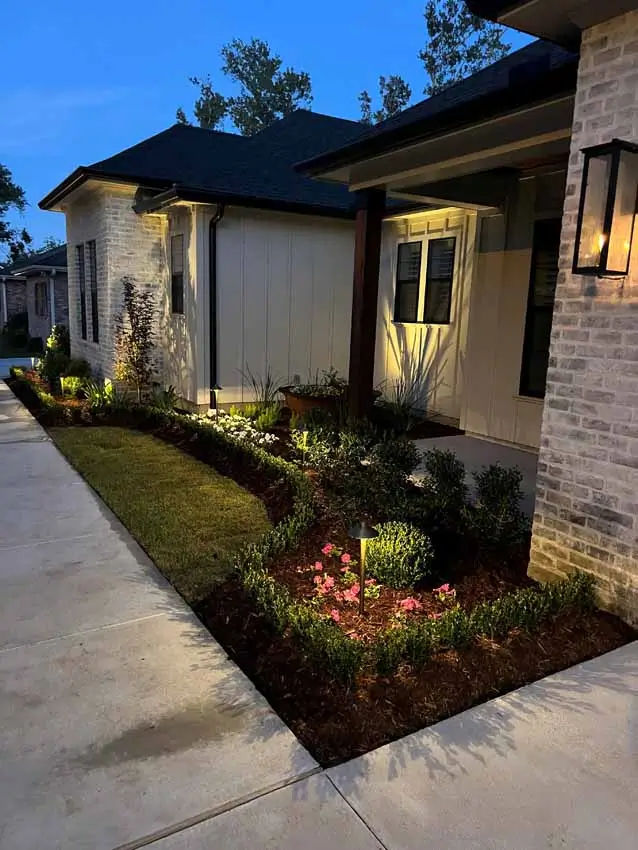
You can spend a lot of money on new plants, fresh mulch, and professional landscaping. But give it a few months, and one problem can make the whole garden look messy. The edges.
Grass starts creeping into the beds. Mulch spills onto the lawn. Those nice, smooth curves you had when the landscaping was first installed become uneven.
We see this often in Metairie and the New Orleans area. And it’s one reason we like using steel edging when we design and install garden beds.
Steel gives us a solid border that stays where we put it. It holds the shape of the garden, helps control grass growth along the edges, and keeps mulch better contained. It also gives the landscaping a clean, finished appearance without a bulky border competing with the plants.
For homeowners investing in new landscaping, we think it’s money well spent.
A Clean Garden Border Makes a Bigger Difference Than You Might Think
When we design a landscape, we spend a lot of time thinking about the shape of the planting beds. Where should the curves begin? How far should the beds extend into the lawn? Will there be enough room for the shrubs when they mature?
These details affect how the finished yard looks.
A bed that’s too narrow makes the plants look crowded. One that extends too far into the lawn can make mowing awkward. And a poorly shaped border can make an otherwise attractive landscape look unfinished.
We like steel edging because it allows us to establish those lines and keep them consistent.
A gentle curve around the front of a house. A straight border alongside a walkway. A wide planting bed beneath a group of trees.
Steel works well with all of them.
We can shape it to follow the layout we’ve designed, then secure it in place. Once the plants and mulch are installed, the edging is barely noticeable. What you see is a clean separation between the grass and the garden.
That’s the look we’re after.
Grass Will Find Its Way Into Your Garden Beds
If you have St. Augustine or Zoysia grass, you’ve probably dealt with this.
Both grasses spread, and that growth doesn’t stop when it reaches the edge of a flower bed. Runners work their way into the mulch, take root, and eventually start growing around your shrubs and flowers.
Then you’re pulling grass out of the beds or paying someone to keep removing it.
We’d rather limit that problem when we install the landscaping.
Steel edging gives us a physical barrier between the grass and the garden. With the edging properly set into the ground, it becomes harder for surface runners to cross directly into the planting bed.
Will it stop every blade of grass? Of course not. Grass can still grow over the top, and some varieties can spread underneath a shallow barrier.
But a properly installed steel edge helps reduce the amount of grass moving into the beds. It also gives your lawn maintenance crew a defined line to follow when trimming.
That makes a difference over the years, especially on properties with large planting beds or long borders along the front of the house.
We Like Steel Better Than Plastic for a Lasting Border
Plastic edging is inexpensive, and we’ve seen plenty of it used around residential flower beds.
The problem is how some of those lighter products hold up.
Plastic can shift, buckle, or start sticking out of the ground. Once that happens, the border looks wavy, and it’s difficult to keep the beds looking neat.
Steel is stronger. When we use the proper edging material and secure it correctly, it holds a straighter, more consistent line.
It also gives us a thinner border than brick or stone.
There’s nothing wrong with a brick garden border. We may recommend one when it suits the house and the landscape design. Some homeowners like the heavier, more decorative appearance.
But when we want the plants to stand out, we prefer a border that doesn’t draw much attention to itself.
Steel gives us that look.
It’s particularly attractive around modern landscaping, but we also like it on traditional homes where we want clean garden beds without adding another decorative feature.
The border should work with the design. We don’t want it competing with everything else.
Steel Edging Helps Keep Mulch in the Garden
Heavy rain is part of living in Southeast Louisiana.
We can install fresh mulch in a garden bed, and a strong afternoon storm can send some of it across the grass, sidewalk, or driveway.
A good border helps keep that material where it belongs.
Steel edging gives the mulch something to rest against instead of letting it spread freely into the lawn. We find this especially useful where garden beds meet open grass or run alongside walkways.
It also helps keep the separation between different landscape materials. For example, if we’re designing a planting bed next to a limestone pathway, we want the mulch and limestone to stay in their designated areas.
There’s a limit to what edging can do, though.
If a yard has water rushing through the garden beds every time it rains, we need to fix the drainage. A steel border alone won’t solve that problem.
We’ve worked on enough properties around Metairie to know how important proper grading and drainage are. Water needs a place to go. If it keeps collecting against the edging or washing through the beds, we’ll address that as part of the landscaping plan.
The LSU AgCenter’s guide to landscape edging also explains how solid borders can help reduce mulch washout and grass growth into planting beds.
We Think About the Edging Before We Start Planting
When we’re planning a new landscape, we want to know what the finished garden will look like after the plants have had time to grow.
That means allowing enough room for shrubs to reach their mature size. It means shaping the beds so they look natural against the house. And it means considering how someone will mow, trim, and maintain the property.
The edging is part of those decisions.
Say we’re renovating a front yard with old shrubs that have grown too large for the existing beds. We may decide to remove the plants, widen the beds, and create a softer curve along the lawn.
That’s a good time to install steel edging.
We can establish the new shape before the plants go in. The edging stays in place as the landscape matures, helping preserve the lines we planned.
Trying to add a border after everything has been planted can be more difficult. Irrigation lines, existing roots, and tight planting spaces may limit what we can do.
We prefer to work out those details during the design.
Our landscape planning and installation services cover the complete project, including preparing the planting areas and making sure the different parts of the landscape work together.
A Good Installation Matters as Much as the Material
We’ve seen plenty of landscaping products that look good when they’re new but cause trouble because they weren’t installed correctly.
Steel edging is no different.
If it isn’t anchored securely, sections can move. If the height is wrong, it can interfere with lawn maintenance or create an exposed edge where people walk.
The connections matter, too. We want smooth transitions between sections, especially along curved beds.
When we’re planning the installation, we consider the grade of the yard, how the ground changes along the border, and where the edging will meet sidewalks or driveways.
We also look at nearby irrigation lines and landscape lighting wiring before working in the soil.
Steel comes in different thicknesses and finishes. Some products have protective coatings. Others are intended to develop a weathered, rust-colored finish over time.
Since we’re working in a humid climate, we pay attention to the material and how it will hold up in the location where it’s being installed.
We want the finished border to look good and remain practical to maintain.
Is Steel Edging Worth the Extra Money?
For many of the landscape projects we design, yes.
It costs more than simply cutting an open edge around a garden bed. It’s also generally more expensive than basic plastic edging.
But we look at what the homeowner is getting for that additional expense.
You get a stronger border that helps preserve the shape of the garden. You reduce the amount of grass creeping directly into the planting areas. Mulch stays better contained, and the beds have a cleaner appearance.
Over time, that can mean less work keeping the borders looking the way they did when the landscaping was installed.
We also know there are situations where another material makes more sense.
A raised garden may need a retaining wall or a different type of border. A decorative brick edge might complement a particular home better. And a property with serious drainage problems may need grading or drainage improvements before we worry about the garden borders.
We’ll recommend what fits the property and the work we’re doing.
But for a typical residential garden bed where we want a durable, neat separation between the lawn and the landscaping, steel is one of our favorite materials.
Questions We Hear About Steel Garden Edging
Will steel edging rust in Louisiana?
Steel can rust, especially in our humid climate. The type of steel and its finish make a difference. Some edging is coated for protection, while other products are designed to develop a weathered appearance. We’ll discuss the material and finish when planning your installation.
Can steel edging be used for curved flower beds?
Yes, and that’s one of the reasons we like it. Steel can follow gentle curves while keeping a consistent edge. It’s useful for planting beds along foundations, around trees, and in larger landscape designs where straight borders would look out of place.
Will steel edging keep all the weeds out of my garden?
It helps reduce grass spreading into the beds, but weed seeds can still grow in the mulch and soil. You’ll still need regular garden maintenance. We recommend steel edging because it makes the border easier to manage, not because it eliminates maintenance.
Planning New Garden Beds? Let’s Get the Borders Right.
When you invest in new landscaping, you want it to keep looking good after the installation crew leaves.
That starts with a good design. The plants need enough room to grow. Water needs to drain properly. The beds need to be shaped in a way that works with your home and lawn.
And the borders deserve some attention.
At Clean Cut Landscape Co., we’ve been designing and installing residential landscapes in the Metairie and New Orleans area since 1986. We know how much the details matter, especially when you’re putting money into a complete landscape renovation.
If you’re replacing old garden beds, changing the layout of your landscaping, or planning a new installation, ask us about adding steel edging.
Call or text Mario at (504) 415-1438, or contact us to discuss your landscaping project. We’ll take a look at your property and help you plan garden beds that look good, work with your yard, and are easier to maintain.