When homeowners ask us which Zoysia grass we recommend, our answer is always Palisades. It’s the only variety of Zoysia we install at Clean Cut Landscape Co., and that decision comes from our years of experience installing and working with lawns around Metairie and the greater New Orleans area.
Our owner, Mario, prefers Palisades because we’ve found that it produces a thicker, fuller-looking lawn and has been less prone to fungus problems in our experience. We’ve worked with grass long enough to know that how a lawn looks on installation day is only part of the picture. We want to see how it grows, fills in, and holds up over time.
Emerald and Zeon are also popular varieties of Zoysia grass. Each has its own appearance and growing characteristics. If you’re comparing these three options for your lawn, here’s what we’ve learned about their differences and why we’ve chosen to install Palisades.
What’s the Difference Between Palisades, Emerald, and Zeon Zoysia?
The most noticeable difference between these three grasses is the width of their blades and how they grow.
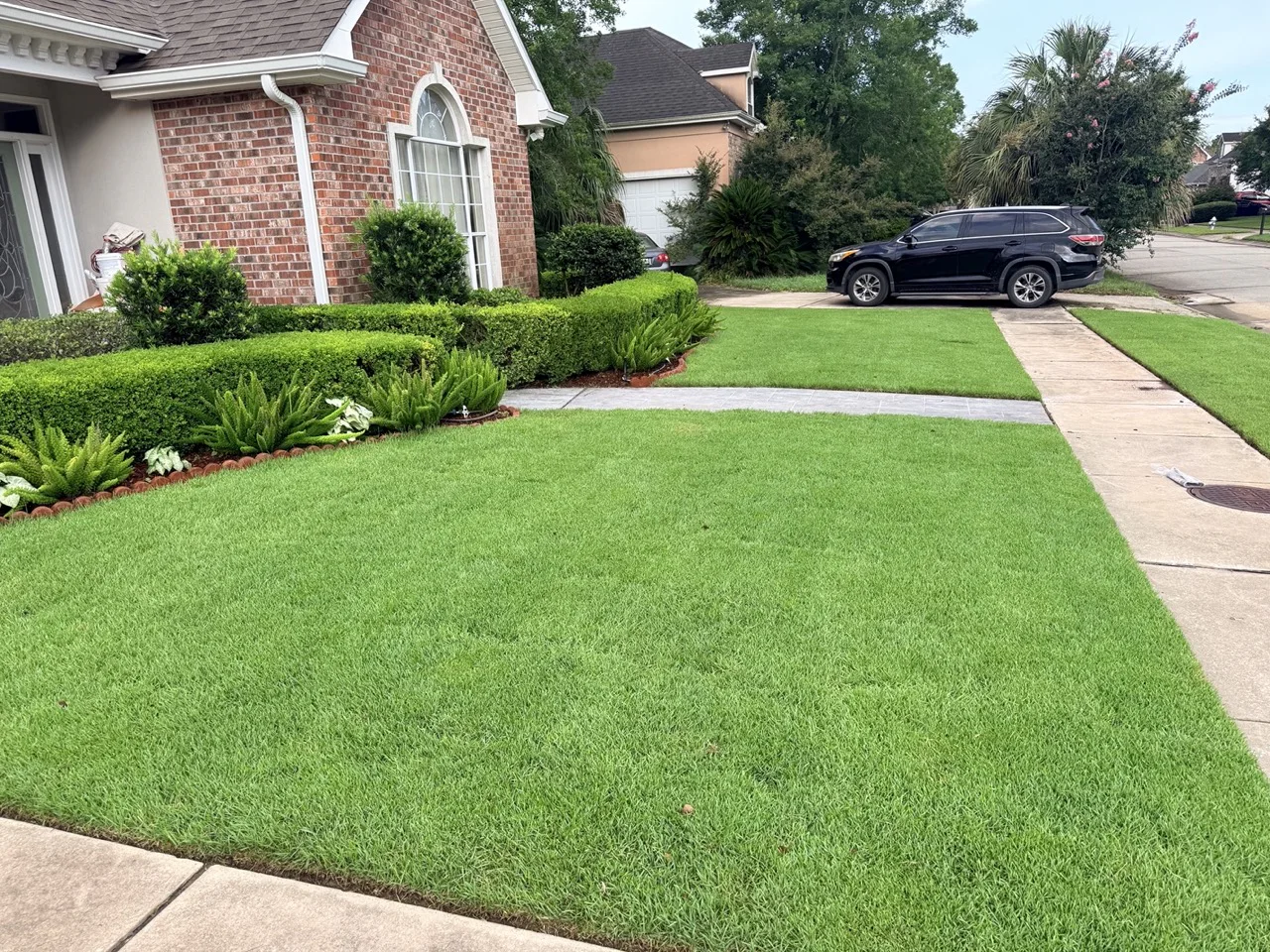
Palisades has a medium-to-coarse blade that grows more upright, giving the lawn a fuller appearance. Emerald and Zeon have much finer blades and tend to create a softer, more tightly textured lawn.
All three are warm-season grasses, which means they grow most actively during the warmer months. As temperatures drop, their growth slows, and they can turn brown during winter dormancy. Once the weather warms up again, healthy Zoysia grass begins to green up.
They also share many of the same basic care requirements. Each needs adequate sunlight, proper drainage, and reasonable watering practices. However, there are differences worth knowing before investing in a new lawn.
Palisades Zoysia: Our Preferred Grass for Louisiana Lawns
We install Palisades Zoysia because we like the results we’ve seen with it over the years.
One of the biggest advantages we’ve noticed is how thick the grass looks once it becomes established. Palisades has wider blades than Emerald or Zeon, and its upright growth gives the lawn a full, healthy appearance.
We also prefer Palisades because of our experience with fungus problems. Louisiana’s humidity and frequent rainfall can create difficult conditions for lawns, especially when water sits in the soil for too long.
Mario has found that Palisades tends to have fewer fungus-related issues in the lawns we’ve worked with. That has played a major role in our decision to use it exclusively for our Zoysia installations.
Palisades also offers several other benefits:
- Good drought tolerance once the grass is established
- A dense growth habit that helps limit weed competition
- Some tolerance for partially shaded areas
- Good durability for normal residential lawn use
- A full appearance with medium-to-coarse grass blades
We still need to prepare the ground properly and make sure the lawn has suitable growing conditions. Even a good variety of grass can struggle when planted in compacted soil or a yard that holds water.
Emerald Zoysia: A Fine-Bladed Grass With a Carpet-Like Appearance
Emerald Zoysia has been used in Southern lawns for many years. Its narrow, fine-textured blades grow closely together, giving the lawn a smooth appearance.
We can understand why some homeowners like the look of Emerald. When it’s healthy and well maintained, it creates a dense lawn with a dark green color.
One issue to watch with Emerald is thatch buildup. Thatch is a layer of older stems, roots, and plant material that collects between the green grass and the soil. Some thatch is normal, but excessive buildup can interfere with water movement and contribute to lawn problems.
Emerald also requires attention to mowing and fertilization. Applying too much nitrogen or allowing the grass to become overgrown can create maintenance challenges.
Although Emerald can produce an attractive lawn, we prefer the wider blades and fuller appearance of Palisades. We also place considerable value on the results we’ve experienced with Palisades in our local climate.
Zeon Zoysia: A Fine-Textured Grass With Good Shade Tolerance
Zeon is another fine-bladed Zoysia variety. It has a soft texture and produces a dense, uniform lawn when growing conditions are favorable.
One of Zeon’s better-known characteristics is its shade tolerance. It can perform well in areas that receive some shade, although it still needs enough sunlight to support healthy growth.
We often see homeowners dealing with lawns that receive a mixture of sun and shade throughout the day. Large oak trees, neighboring houses, and fences can all limit the amount of sunlight reaching the grass.
While Zeon may be suitable for some partially shaded lawns, shade tolerance doesn’t mean a grass will grow successfully in deep shade. A yard with very limited sunlight may struggle to support Zoysia of any variety.
Zeon is also a fine-textured grass, which gives it a different appearance than Palisades.
For our installations, we prefer the thicker-looking growth we’ve experienced with Palisades. Its performance on the properties we’ve worked on is the reason we continue to recommend it.
Why We Pay Close Attention to Fungus Problems in Louisiana
One reason we’re particular about the grass we install is the amount of moisture our lawns deal with.
In Metairie, Kenner, River Ridge, and surrounding communities, we regularly see yards that stay wet after heavy rain. Some properties have low spots where water collects. Others have compacted soil that doesn’t allow water to drain properly.
Those conditions can create problems for any grass, including Zoysia.
Large patch is one fungal disease that can affect Zoysia lawns. It often appears during cooler, damp conditions and can cause yellowing or brown patches that spread through the grass.
We’ve found that Palisades has been less troublesome when it comes to fungus in our own experience. That’s one of Mario’s biggest reasons for recommending it.
However, we wouldn’t tell a homeowner that Palisades is completely resistant to fungus. No Zoysia variety is immune to lawn diseases.
We also know that many problems homeowners blame on the grass variety are actually related to drainage, excessive watering, poor soil conditions, or improper maintenance.
If the ground stays saturated for days after every rain, we need to address that problem. Installing new sod over wet, poorly prepared soil can lead to the same problems the homeowner was trying to get rid of.
Why Proper Soil Preparation Matters When Installing Palisades Zoysia
We believe the work underneath the sod is just as important as the grass we install.
When we renovate an existing lawn, we start by removing the old grass and preparing the ground for the new sod. Depending on the property, this may include correcting uneven areas, improving the grade, and loosening compacted soil.
We also test the soil for new lawn installations so we can identify conditions that may need attention before planting.
Our soil conditioner helps break up compacted ground, making it easier for roots to grow into the soil. We want the new sod to establish a healthy root system instead of sitting on top of hard, poorly prepared ground.
Drainage is another major consideration.
We frequently recommend installing drainage systems in backyards where water has trouble moving off the property. We’ve seen how much difference proper grading and drainage can make when installing a new lawn.
You can learn more about our process on our Sod Installation and Grading page.
If standing water is a problem, we can also help with Backyard Drainage Systems before the new sod goes down.
Good preparation gives Palisades the conditions it needs to establish and grow.
Does Palisades Zoysia Require a Lot of Maintenance?
Once Palisades becomes established, it can make a manageable residential lawn with regular care.
Like other Zoysia varieties, it needs mowing, watering, and fertilization. However, we encourage homeowners to pay attention to what their lawn actually needs rather than watering or fertilizing on a fixed schedule without considering the weather.
Too much water can create problems, particularly in yards where the soil already holds moisture.
We also want homeowners to understand that Zoysia grows differently throughout the year. During the warmer months, the lawn actively grows and needs regular mowing. As cooler weather arrives, growth slows and the grass may enter dormancy.
A brown lawn during winter doesn’t necessarily mean something is wrong. We regularly install Zoysia sod during cooler weather when it may already be dormant.
The important thing is giving the grass adequate time and proper conditions to establish its roots.
Which Zoysia Grass Would We Choose for Your Lawn?
If you’re comparing Palisades, Emerald, and Zeon, our recommendation is Palisades.
We prefer its wider blades and the fuller appearance it develops as the lawn becomes established. More importantly, Mario has found it to be a dependable choice in our local installations, with fewer fungus-related problems than he’s experienced with other varieties.
That’s why Palisades is the only Zoysia grass we install.
We still need to consider the conditions of your property before installing any new lawn. Areas with heavy shade, standing water, or poor soil may need additional work before sod installation.
Our goal is to address those conditions during preparation so your new lawn has the best opportunity to establish and grow.
Ready to Replace Your Lawn With Palisades Zoysia?
If your current lawn is thin, patchy, uneven, or struggling with drainage problems, we can help you determine what needs to be done before installing new sod.
At Clean Cut Landscape Co., we specialize in lawn removal, grading, drainage improvements, and professional sod installation throughout Metairie, Kenner, River Ridge, and the greater New Orleans area.
We install Palisades Zoysia because it’s the variety we prefer and the one we’ve had the best experience working with.
Call or text us at (504) 415-1438 to discuss your lawn with Mario, or contact us to request a sod installation quote. We’ll talk through the condition of your yard, what preparation may be needed, and what to expect from a new Palisades Zoysia lawn.