At Clean Cut Landscape Co., we correct yard grading for Metairie homeowners to prevent yard flooding during heavy Gulf Coast rainstorms. In the low-lying New Orleans area, flat ground and settling soil often combine to create standing water problems in residential lawns. Proper yard grading involves re-shaping the surface of your land to create a continuous downward slope away from your home foundation. This sloped soil directs rainwater runoff toward street gutters or dedicated subsurface drainage systems, keeping your yard dry and stable. This article covers how yard grading protects your property, how our leveling process operates, what warning signs indicate poor grading, and how our professional team integrates grading with drainage and sod installations to protect your landscape.
Why Yard Grading Matters
Metairie and the surrounding communities experience some of the heaviest rainfall in the United States. When several inches of rain fall within a single hour, a flat or sunken yard cannot shed the water quickly enough. Over time, the soil around residential foundations settles. This settlement often forms a reverse slope, which means the ground tilts back toward your house rather than away from it.
When water drains toward your foundation walls, it creates severe structural risks. Saturated soil exerts hydrostatic pressure against concrete slabs, which leads to foundation cracks, interior moisture, and crawlspace rot. Accumulating water also causes soil erosion, washing away topsoil and leaving plant roots exposed.
For your lawn, poor yard grading leads to waterlogged soil that suffocates turf grass roots. Grass roots need oxygen to survive. When water pools in lawn depressions for more than 24 hours, the grass roots drown, leading to large muddy patches, fungal diseases, and weed infestations. Standing water also creates breeding areas for mosquitoes, making your outdoor spaces unusable. Correcting the slope of your yard resolves these issues by letting gravity pull surface water toward municipal drains.
How Yard Grading Works
Yard grading is a precise process that requires specialized equipment and technical knowledge of elevations. We do not simply dump soil in your yard and smooth it with a rake. Our crew follows a systematic approach to establish a permanent slope that protects your property.
First, we perform an elevation assessment. We measure the height of your home foundation, patios, walkways, and the street curb. This helps us calculate the existing slope and identify low spots where water pools. Standard landscape engineering guidelines call for a minimum slope of two percent. A two percent slope means the ground drops two inches for every ten feet of distance away from your foundation.
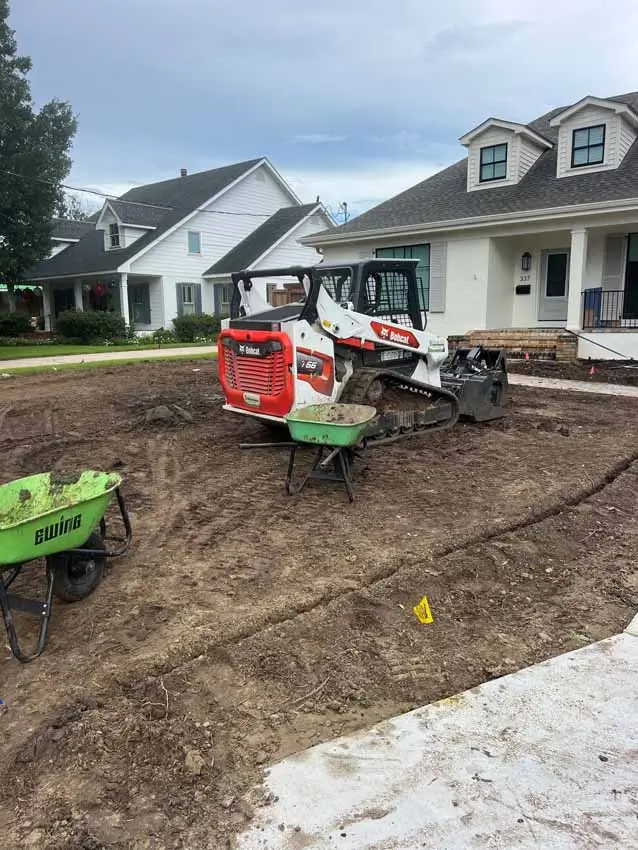
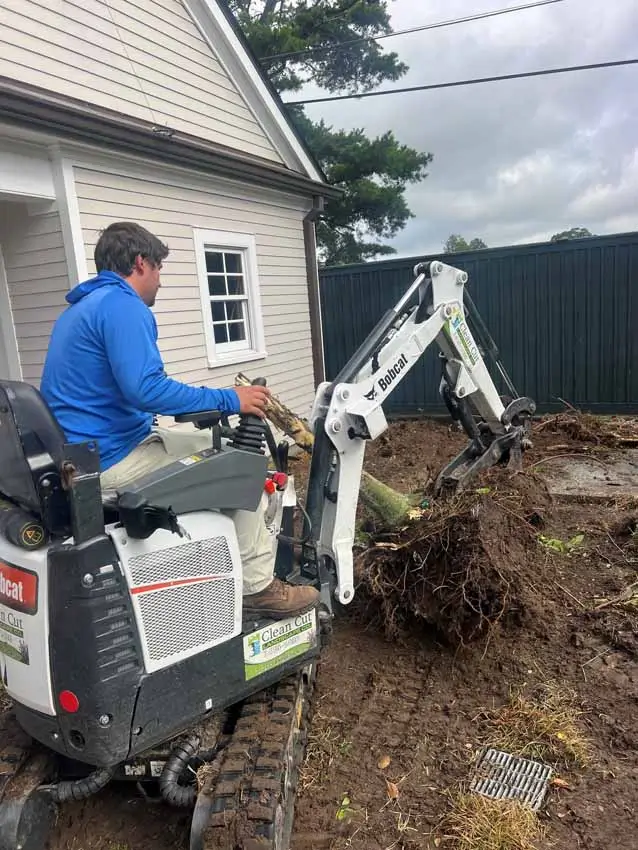
Second, we prepare the site. We remove the existing dead turf, weeds, and debris from the area. This step exposes the subsoil so we can address the underlying grade issues. If we simply put new soil over old grass, the organic material will decay, causing the ground to settle and recreate the old low spots.
Third, we add and shape the grading soil. We use high-quality topsoil or a sandy-clay mix depending on your existing soil structure. We spread this material in thin layers, compacting each layer with machinery to prevent future settling. We shape the soil to create a continuous, smooth slope away from all structures. Gravity pulls surface water downhill along this slope, moving it safely toward street drainage or backyard swales.
Fourth, we perform final compaction and raking. This establishes a firm, smooth surface that is ready for sod installation. The compacted soil resists erosion while still allowing new grass roots to penetrate and establish themselves.
What Customers Should Know
Homeowners should monitor their lawns during and after rainstorms to identify grading issues before they cause foundation damage. There are several clear indicators that your yard has poor grading:
- Low spots in the turf that remain muddy or soft days after the rain stops.
- Water pooling directly against your concrete foundation, brick siding, or patio edges.
- Soil washing out onto sidewalks, driveways, or patios during storms.
- Areas of turf that consistently die or thin out due to rot.
- Damp smells or mold growth along the bottom edge of your home exterior.
Yard grading issues often arise after other home improvement projects. For example, installing a new fence, patio, or swimming pool can disrupt the natural flow of water across your property. The soil excavated during pool construction can end up in the wrong areas, blocking the exit paths for rainwater. Sinking soil can also occur around mature tree roots or over decaying building debris buried during original home construction.
It is helpful to coordinate yard grading with other outdoor projects. When we grade your lawn, we often adjust sprinkler heads to match the new soil elevations. This coordination prevents irrigation heads from being buried or left sticking up too high, which can cause uneven water coverage or lawn mower damage.
Benefits of Proper Yard Grading
A properly sloped lawn provides lasting protection for your home and landscape. The table below outlines the differences between a yard with poor grading and one with proper grading:
| Yard Condition | Poor Yard Grading | Proper Yard Grading |
|---|---|---|
| Water Movement | Water drains toward foundation walls or pools in low lawn areas. | Water flows away from buildings toward designated drainage exit points. |
| Soil Moisture | Muddy zones develop and soil remains saturated for days after rain. | Soil sheds excess surface water and dries evenly. |
| Lawn Health | Saturated soil suffocates grass roots, leading to turf disease or rot. | Turf grass roots receive balanced moisture and oxygen, supporting strong growth. |
| Hardscape Safety | Patios, walkways, and driveways crack or shift due to water pooling underneath. | Hardscapes remain stable on dry, properly supported sub-base material. |
| Pest Control | Standing water creates breeding grounds for mosquitoes and lawn pests. | Absence of standing water removes pest breeding habitats from your property. |
Establishing a positive slope also improves the performance of subsurface drainage systems. If we install French drains or catch basins, proper grading helps guide surface runoff into those drains instead of letting water bypass them. This combined approach of surface grading and subsurface piping provides complete water management for your property.
What Makes Clean Cut Landscape Co. Different
At Clean Cut Landscape Co., we have provided professional landscape design and yard improvements since 1986. Mario Boesch leads our local, owner-led company, and he personally conducts the on-site consultations for every drainage and grading project. We maintain an A+ rating and accreditation with the Better Business Bureau, which we have held since April 29, 2020. Our crew has completed hundreds of drainage projects across Metairie, Harahan, and River Ridge, earning 301 verified Google reviews from local homeowners.
We hold essential state credentials to protect your property, including Louisiana Landscape Horticulturist license number 1343 and Arborist license number 0785. Our technical expertise allows us to offer an integrated approach that single-service contractors cannot match. We combine yard grading with professional landscape planning, Rain Bird irrigation repairs, and high-quality sod installation.
We are highly selective about the turf grass we install after grading. We favor premium Zoysia sod because it forms a dense, durable lawn that locks the soil in place and resists local turf diseases. We stand behind our work with a 60-day warranty on qualifying full-sun Zoysia installations, whereas we specifically exclude St. Augustine sod due to its susceptibility to pests and wet-soil rot in our local climate. We also provide a five-year warranty on our drainage system installations, subject to standard exclusions like major storms or root intrusion.
Related Services or Helpful Resources
When we perform yard grading, we often integrate other systems to solve complex water problems. If your soil remains saturated even after grading, we can install custom backyard drainage systems to carry water away from low-lying areas. For lawns that need complete restoration after grading work, we provide expert Zoysia sod installation to establish a healthy, durable lawn.
To learn more about the engineering principles of soil leveling and land preparation, you can read about the process of grading on Wikipedia. This resource explains how contractors calculate slopes and move earth to prepare sites for stable drainage.
FAQs About Yard Grading
How long does it take for a newly graded yard to settle?
Grading soil will settle slightly after the first few rains. We compact the soil with mechanical rollers during installation to minimize this settlement. Usually, the grade becomes completely stable within three to four weeks once the roots of your new Zoysia sod grow into the soil and lock it in place.
Will yard grading damage the roots of my existing trees?
Adding more than two inches of soil over the root zone of mature trees can suffocate their roots. When we grade near trees, we use specialized techniques to protect the root systems. As licensed arborists, we understand how to design grades that protect your trees while still directing surface water away from your home.
Can yard grading solve my drainage problems without pipes?
Yes, simple grading can solve many surface water issues if there is a clear downhill path to the street curb or a ditch. However, if your property is lower than the surrounding lots, grading alone may not be enough. In these situations, we combine surface grading with subsurface PVC pipes and catch basins to collect and pump the water out.
What is the best time of year to grade my yard in Metairie?
We can perform yard grading year-round, but the best time is during the spring or early fall. During these seasons, the weather is milder, which helps newly installed Zoysia sod establish strong roots quickly. Grading during these times also prepares your lawn for the heavy summer rainstorms.
Takeaway
Proper yard grading is the foundation of a dry, healthy landscape. By correcting the slope of your lawn, you protect your home foundation from water damage and create a stable surface for a beautiful lawn. At Clean Cut Landscape Co., we provide owner-led drainage, grading, and Zoysia sod services to Metairie homeowners. We coordinate every step of the project to ensure your outdoor systems work together. To request an on-site landscape consultation with Mario Boesch to evaluate your yard grade, call or text us at (504) 415-1438.